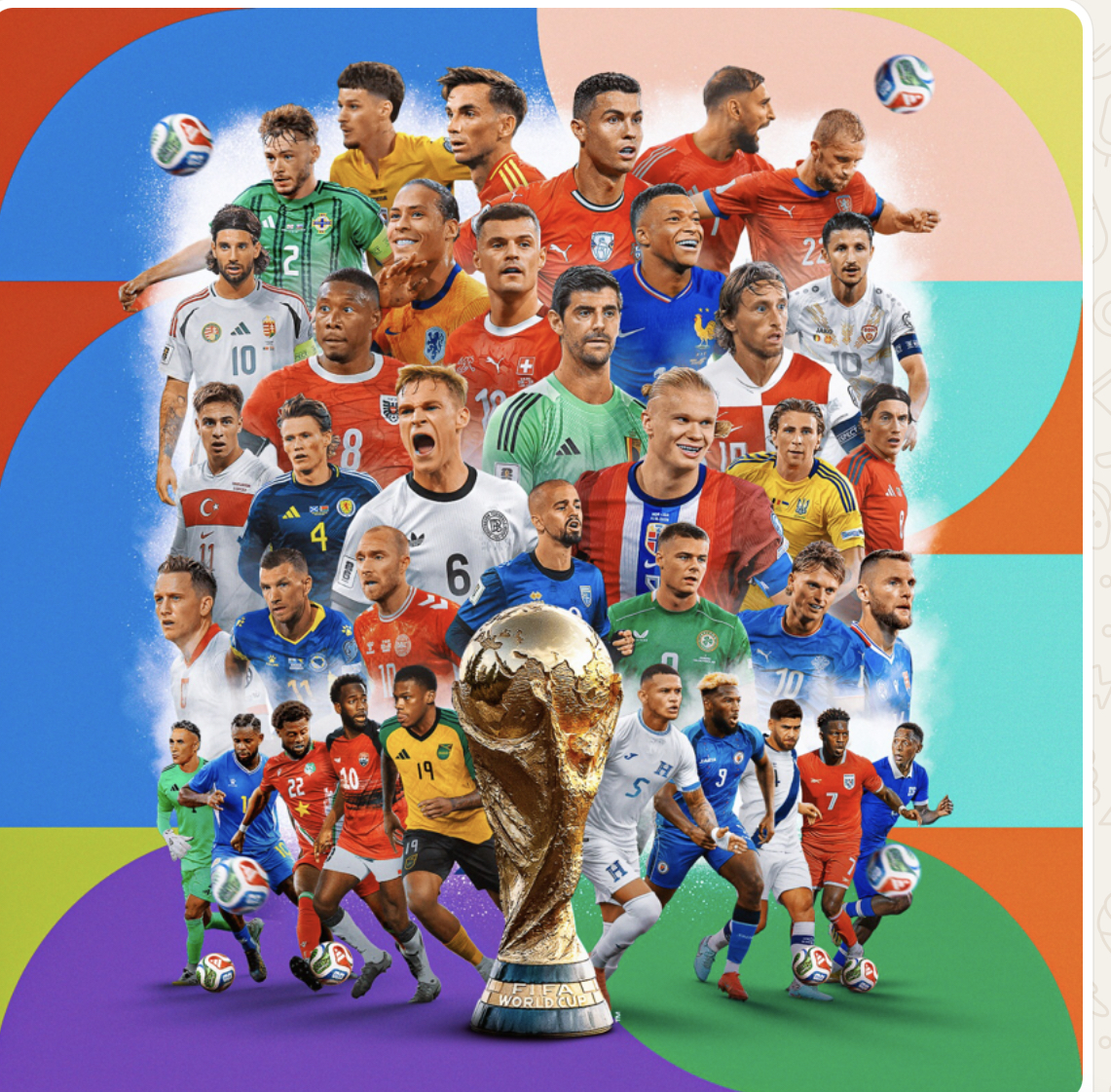
The 2026 FIFA World Cup is set to be the largest in the tournament’s history, and anticipation has been building around two key dates: the draw and the tournament itself. Here is a clear rundown of the essentials, from the expanded format to the nations that had already booked their places.
A Bigger World Cup
The headline change for 2026 is the size of the field. The tournament expands to 48 nations, up from the 32-team format fans have known for decades. That growth means more countries, more matches and a broader spread of footballing nations reaching the game’s biggest stage than ever before.
The 2026 edition is also notable for being co-hosted, with the United States, Mexico and Canada all qualifying automatically as host nations. Every other place is decided through the qualifying campaigns run by each confederation.
The Draw and Key Dates
The draw for the 2026 World Cup was scheduled for Friday 5 December. That day carries added significance, as it was also set to see the first-ever FIFA Peace Prize awarded by the organisation’s president, Gianni Infantino. The main tournament itself is scheduled to be played between 11 June and 19 July.
(General football context) The draw is one of the most important moments in the build-up to any World Cup. It sorts the qualified teams into groups, shapes the potential knockout path, and gives fans their first real sense of the fixtures and rivalries to come. For players, coaches and supporters alike, it is the point at which the tournament begins to feel real.
Who Had Qualified
As of November 2025, the following teams had secured their places at the 2026 World Cup:
- Hosts: Canada, Mexico, United States
- Africa: Algeria, Cape Verde, Egypt, Ghana, Ivory Coast, Morocco, Senegal, South Africa, Tunisia
- Asia: Australia, Iran, Japan, Jordan, Qatar, Saudi Arabia, South Korea, Uzbekistan
- Europe: England, France, Croatia
- Oceania: New Zealand
- South America: Argentina, Brazil, Colombia, Ecuador, Paraguay, Uruguay
The list already featured a strong mix of traditional powers and emerging nations, with several confederations still to complete their qualifying picture at that stage.
What the Expanded Format Means
(General football context) Moving to 48 teams changes the shape of the competition. It opens the door to nations that might previously have narrowly missed out, giving more countries a genuine shot at the finals and spreading the tournament’s reach across the football world. For fans, it promises a wider variety of styles and stories; for smaller footballing nations, it offers a rare and valuable stage.
Conclusion
The 2026 World Cup was shaping up as a landmark edition: a 48-team field, three host nations, a draw set for 5 December alongside the inaugural FIFA Peace Prize, and a tournament scheduled from 11 June to 19 July. With a broad group of nations already qualified by late 2025, the build-up pointed toward one of the most expansive and widely followed World Cups yet.