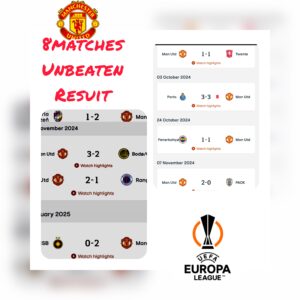
Manchester United secured their place in the last 16 of the Europa League, reaching the knockout stage unbeaten across eight matches in the competition. It was a welcome piece of positive news for the club and a reminder that European progress can offer a lift even during an inconsistent domestic campaign.
A Contrast Between Europe and the Premier League
United’s European run stood in clear contrast to their league form. In the Premier League, their record read eight wins, five draws and ten losses — figures that reflected a difficult and uneven season. Yet in Europe they remained unbeaten through the league phase, doing enough to qualify automatically for the Round of 16 and avoid the additional play-off round.
(General football context) It is not unusual for a club’s continental and domestic form to diverge. Different opposition, rotation of the squad, and the change of rhythm that European nights bring can all produce a very different version of the same team. For United, the Europa League offered both a route to silverware and a chance to build momentum away from league pressures.
The Teams Qualifying Automatically
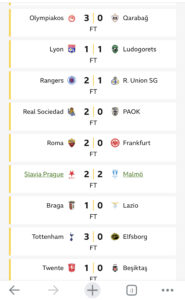
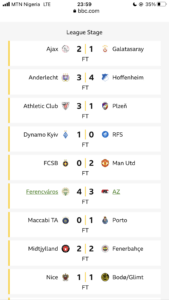
Under the competition’s format, the strongest performers in the league phase move straight into the last 16. The sides listed as qualifying automatically were:
- Lazio
- Athletic Club
- Manchester United
- Tottenham
- Frankfurt
- Lyon
- Olympiacos
- Rangers
That group underlined the strength of the field, mixing established European names with in-form challengers — the kind of company any club would be pleased to keep at this stage.


Encouraging Signs for Tottenham’s Youngsters
The round also brought praise for Tottenham, who, despite a testing period of their own, saw encouraging performances from young players Damola Ajayi, Mikey Moore and Dane Scarlett. Their displays gave the club’s supporters a reason to smile and a glimpse of emerging talent coming through.
(General football context) European competition has long been a valuable proving ground for academy graduates. It offers younger players meaningful minutes in a competitive setting, and standout performances on this stage can accelerate a player’s development and raise their profile.
How the Rest Reach the Last 16
For the clubs who did not finish high enough to qualify automatically, there is still a path forward. Teams that finished between ninth and 24th in the league phase enter a two-legged knockout play-off, competing over home and away legs for the remaining places in the last 16.
(General football context) This expanded, league-phase format is designed to keep more clubs involved for longer and to add jeopardy to the closing rounds. The two-legged play-off rewards consistency across the group stage while still giving lower-placed sides a genuine second chance.
Conclusion
Reaching the last 16 unbeaten was a clear positive for Manchester United, offering a brighter storyline than their league campaign and keeping alive a realistic route to a European trophy. With a strong field qualifying automatically and a competitive play-off round to set the remainder of the bracket, the knockout stage promised plenty of intrigue — and United had earned their place among the sides going straight through.