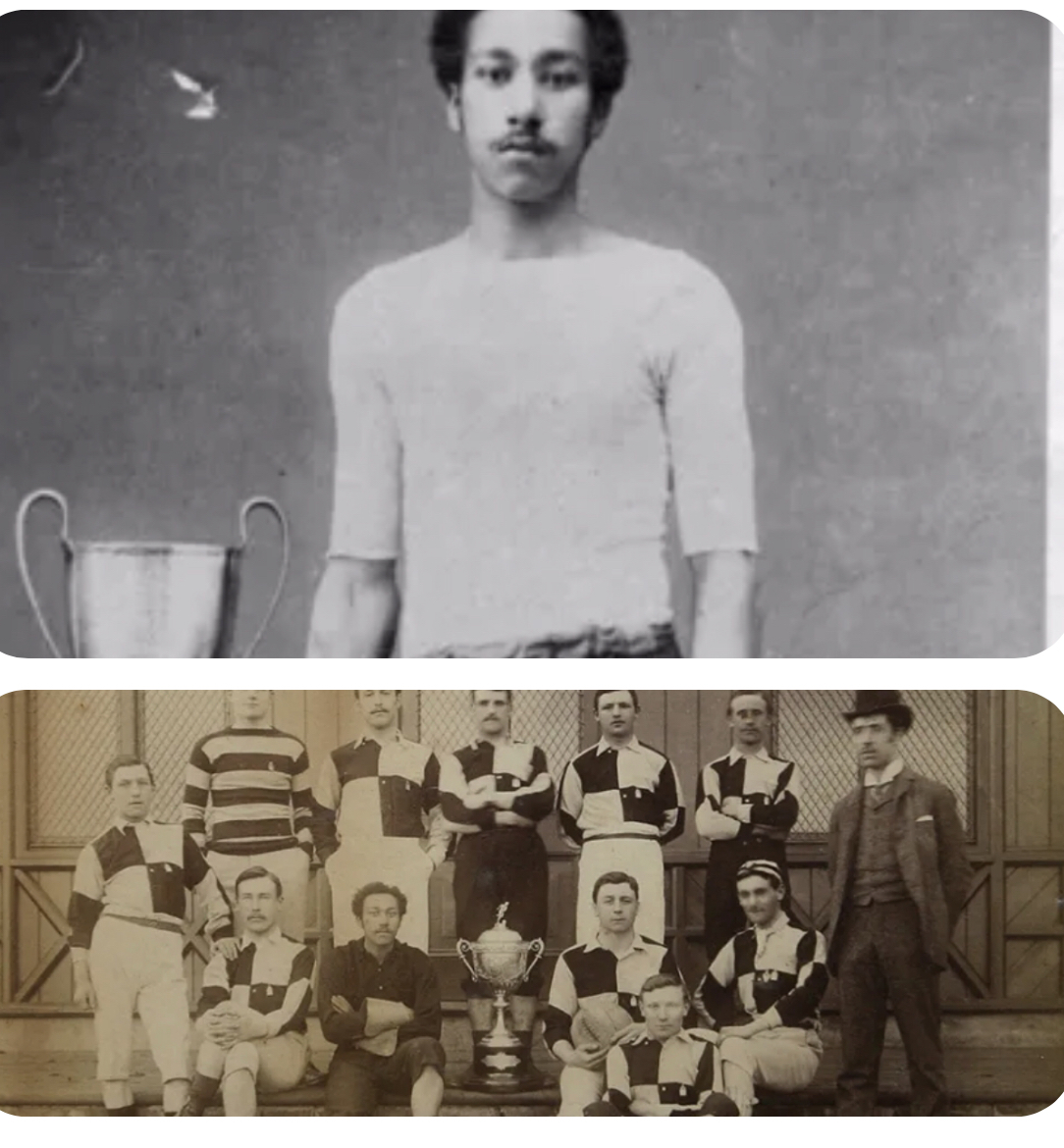
Football history is full of pioneers, but few are as significant as the man widely recognised as the first Black professional footballer. His name was Arthur Wharton, and his story stretches from West Africa to the north of England, spanning achievement on the sporting field and hardship at the end of his life.
Early Life: From Ghana to England
Arthur Wharton was born in Jamestown, Ghana, in 1865. He came from a mixed heritage: his mother, Annie Florence Egyriba, was Ghanaian, and his father, Henry Wharton, was Scottish. In 1883, Wharton moved to England, initially to train as a missionary at Cleveland College in Darlington, following his father’s path.
(General historical context) Britain in the 1880s was a very different place, and for a young man of African and Scottish heritage to arrive and make his way in organised sport was extraordinary for the era. That Wharton did so, and excelled, is a large part of why his name is still remembered today.
A Sporting Career Takes Shape
Although he had come to England to study, Wharton developed a deep interest in sport. He began his football journey as an amateur with Darlington Football Club before turning professional, going on to represent a number of English clubs during his career, including Sheffield United.
(General football context) Turning professional in the early era of the organised game was itself a notable step. Professional football was still young, and the players who took it up were helping to shape a sport that would go on to become the most popular in the world. Wharton’s move to the professional ranks placed him among the game’s early professionals.
A Difficult Final Chapter
Despite his pioneering career, Wharton’s later life was marked by hardship. In 1930, he died penniless at the Springwell Sanatorium in Balby and was buried in an unmarked grave in Edlington Cemetery. For many years his story went largely unrecognised — a stark contrast to the significance of what he had achieved.
Why Arthur Wharton’s Story Still Matters
(General historical context) Recognising figures like Arthur Wharton matters because they remind us that the history of football is broader and more diverse than it is sometimes remembered. As the first Black professional footballer, Wharton was a trailblazer whose presence in the early game helped open a door that countless players have walked through since. His life is a reminder both of how far the sport has come and of the pioneers whose contributions deserve to be remembered.
Conclusion
Arthur Wharton’s journey — born in Jamestown, Ghana in 1865, arriving in England in 1883, and building a professional football career before his death in 1930 — is one of the most important early stories in the sport. As the first Black professional footballer, he holds a permanent place in football history, and his legacy continues to be honoured by those who believe the game’s pioneers should never be forgotten.